Beat Constipation Naturally: Top Causes & 10 Fast Home Remedies for Instant Relief
Dealing with constipation can be incredibly frustrating, uncomfortable, and disruptive to your daily life. If you’re feeling bloated, sluggish, or struggling to go to the bathroom, you are not alone.
The good news? You don’t always need to reach for harsh over-the-counter laxatives. By understanding what causes constipation and utilizing simple, natural home remedies, you can get your digestive system back on track safely and effectively.
Why Does Constipation Happen? (Top Causes)
Constipation occurs when stool moves too slowly through your digestive tract, becoming hard and dry. Here are the most common culprits:
- Low Fiber Intake: Fiber is the backbone of healthy digestion. A diet lacking in fiber fails to add the necessary bulk to your stool, making it hard to pass.
- Inadequate Hydration: Water keeps things moving. Without enough fluids, your colon absorbs water from your stool, leaving it dry and difficult to pass.
- Sedentary Lifestyle: Physical activity stimulates your intestinal muscles. A lack of movement slows down the digestive process.
- Stress and Anxiety: The gut and brain are highly connected. High stress levels can disrupt normal bowel functions and slow down digestion.
- Certain Medications: Painkillers (especially opioids), antacids containing calcium or aluminum, iron supplements, and some antidepressants can cause constipation as a side effect.
- Underlying Medical Conditions: Issues like Irritable Bowel Syndrome (IBS), hypothyroidism, diabetes, and neurological disorders can lead to chronic constipation.
10 Fast & Natural Home Remedies for Constipation Relief
If you are looking for gentle, natural ways to relieve constipation, try incorporating these proven remedies into your routine:
1. Hydrate, Hydrate, Hydrate
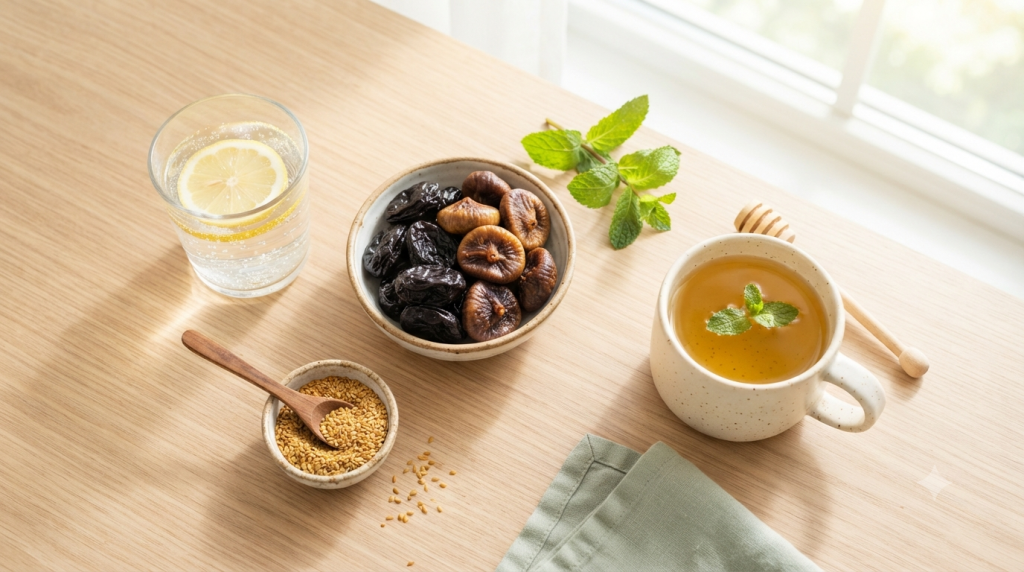
Drink plenty of water throughout the day. Warm water or warm lemon water in the morning can specifically help stimulate your digestive tract and soften stools.
2. Load Up on Fiber
Gradually increase your intake of fiber-rich foods like whole grains, beans, lentils, fruits, and vegetables. Pro tip: Increase fiber slowly to avoid gas and bloating!
3. The Magic of Prunes and Prune Juice
Prunes are nature’s ultimate laxative. They contain sorbitol, a sugar alcohol that draws water into the intestines. Eat 4-5 prunes or drink a glass of warm prune juice daily.
4. Add Ground Flaxseed to Your Diet
Flaxseeds are packed with both soluble and insoluble fiber. Add a tablespoon of ground flaxseed to your morning smoothie, yogurt, or oatmeal to help soften stools.
5. Try Psyllium Husk
Psyllium is a powerful bulk-forming laxative. Mix a teaspoon of psyllium husk in a large glass of water and drink it immediately. Always follow it with another glass of plain water.
6. Snack on Dried Fruits
Figs, apricots, and raisins are excellent sources of fiber and natural sugars that promote bowel movements. Soaking dried figs in water overnight and eating them in the morning is a great traditional remedy.
7. Sip on Herbal Teas
Certain teas can soothe the digestive tract and stimulate movement. Peppermint and chamomile teas relax the gut muscles, while Senna tea acts as a natural stimulant laxative (use senna only for short-term relief).
8. The Morning Olive Oil Trick
Consuming one tablespoon of extra virgin olive oil on an empty stomach in the morning can act as a lubricant, helping stool slide through the intestines more smoothly.
9. Get Moving
You don’t need to run a marathon. A brisk 20-30 minute walk, some light yoga, or basic stretching can physically massage your intestines and stimulate bowel contractions.
10. Relax in an Epsom Salt Bath
While eating Epsom salt is a known laxative, taking a warm bath with Epsom salts is a great complementary remedy. The warm water and magnesium help relax your abdominal muscles and reduce stress, indirectly promoting a bowel movement.
🚨 Red Flags: When to See a Doctor
Home remedies are fantastic for occasional constipation, but chronic or severe cases require professional medical attention. Consult your doctor immediately if you experience:
- Constipation that lasts for more than a few weeks despite home treatment.
- Unexplained, unintentional weight loss.
- Blood in your stool or bleeding from the rectum.
- Intense, severe abdominal pain or extreme bloating.
- Bowel movements accompanied by severe nausea or vomiting.
- Thin, pencil-like stools.
The Bottom Line
Constipation is a common and uncomfortable experience, but it is highly manageable. By understanding your triggers and adopting a lifestyle rich in fiber, hydration, and regular movement, you can maintain excellent digestive health.
Remember, prevention is always better than cure. Make these healthy habits a part of your daily routine, and don’t hesitate to seek medical advice if your symptoms persist. Your gut will thank you!